For many injured drivers and passengers, PIP provides the first source of payment for reasonable and necessary accident-related medical expenses, regardless of who caused the collision. Once the available PIP medical benefits are exhausted, private health insurance may cover additional eligible treatment, subject to the terms of the health insurance policy.
Navigating the relationship between PIP, health insurance, and third-party liability claims can quickly become overwhelming. Working with our experienced Portland car accident attorneys can help ensure your medical bills are processed correctly and your right to financial recovery is protected.
How Does Oregon’s PIP Primary-Payer Rule Work?
Oregon is a mandatory PIP state. Under Oregon Revised Statutes (ORS) § 742.520, motor vehicle liability policies issued in Oregon generally must include Personal Injury Protection benefits.
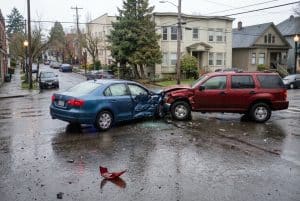
PIP is a no-fault benefit, meaning you do not have to prove another driver caused your accident before seeking eligible medical payments. Your coverage can apply even if another driver ran a red light on SE Powell Boulevard, rear-ended you on I-5, or caused a collision at a Portland intersection.
However, Oregon law distinguishes between situations in which PIP is primary and those in which it is excess over other available insurance benefits.
When Does PIP Pay First in Oregon?
Under ORS § 742.526, PIP benefits are generally primary in the following situations:
- The insured driver: You are injured while occupying the vehicle insured under your policy.
- Resident family members: A family member living in your household is injured while occupying your insured vehicle.
- Passengers: A passenger is injured while occupying the insured vehicle.
- Pedestrians in the insured household: You or a qualifying household family member are injured as pedestrians.
Oregon law also identifies situations in which PIP coverage is excess rather than primary.
For example, if you or a qualifying household family member is injured while occupying a vehicle that is not insured under your policy, your PIP benefits may be excess. Similarly, when a pedestrian who is not the insured or a resident family member is struck by the insured vehicle, that vehicle’s PIP coverage is excess over other available collateral benefits.
Why does this distinction matter? If your accident falls into an excess-coverage category, another available insurance policy may be responsible for paying eligible medical expenses before that particular PIP policy contributes.
What Are the Minimum PIP Benefits Required in Oregon?
Under ORS § 742.524, Oregon requires minimum PIP benefits for medical expenses, qualifying lost income, essential services, and certain childcare expenses.
These are statutory minimum benefits, not necessarily the maximum coverage available under every policy. Insurers may offer more favorable PIP benefits, and policy-specific deductibles or other applicable terms should also be reviewed.
Does the $15,000 PIP Limit Cover Every Medical Expense?
No. The $15,000 statutory minimum is an aggregate limit for qualifying medical expenses per injured person, not a separate allowance for each treatment or healthcare provider.
Covered services can include:
- Emergency medical treatment and hospital services.
- Ambulance transportation.
- Diagnostic testing, including X-rays, CT scans, and MRIs.
- Surgical procedures and related medical services.
- Dental treatment related to the accident.
- Prosthetic services.
Medical expenses must be reasonable and necessary and fall within the applicable two-year period following the injury.
Importantly, the two-year period is the timeframe for incurring qualifying medical expenses under the statutory minimum coverage. It does not mean that every person automatically receives two full years of treatment regardless of whether the $15,000 limit has already been exhausted.
When Does Private Health Insurance Pay for Car Accident Injuries?
Private health insurance can help cover medical expenses that remain after available PIP benefits have been exhausted or when particular treatment is not covered by PIP.
However, the order of payment depends on the applicable insurance policies and the priority rules in ORS § 742.526.
For example, suppose you are driving your own insured vehicle when another driver rear-ends you on I-5. You sustain injuries requiring emergency treatment, diagnostic imaging, and physical therapy.
If your PIP coverage is primary, your auto insurer generally pays qualifying medical expenses first, up to the available PIP limit. Once those benefits are exhausted, your healthcare providers may submit remaining eligible expenses to your private health insurance.
The following table illustrates how coverage coordination generally works:
Important: This is an illustrative payment sequence, not a universal rule for every Oregon accident. If PIP is excess under ORS § 742.526, the order may be different. Your health insurance policy may also impose specific requirements for accident-related treatment.
What Happens If a Hospital Bills Health Insurance Instead of PIP?
Billing mistakes can create unnecessary delays and confusion after an accident.
For example, a hospital may initially receive your private health insurance information during emergency registration without knowing that you have available PIP coverage. If your PIP policy is primary, the provider may need to correct its billing records and submit eligible expenses to the appropriate auto insurer.
If you receive a denial or unexpected medical bill, do not automatically assume you are personally responsible for the balance.
Instead:
- Contact the hospital’s billing department and explain that your injuries resulted from a motor vehicle accident.
- Provide your PIP claim number and auto insurance information.
- Ask whether the provider has submitted the charges to the appropriate PIP carrier.
- Provide your health insurance information for coordination when necessary.
- Request an updated itemized statement showing payments, adjustments, and outstanding balances.
Keeping both insurance companies informed can help prevent billing disputes and collection problems.
Can Health Insurance Demand Repayment From My Car Accident Settlement?
Yes, potentially. When private health insurance pays medical expenses resulting from an accident caused by another driver, the insurer may have reimbursement or subrogation rights.
Subrogation is the legal process through which an insurance company seeks reimbursement for benefits it paid when another party is responsible for the underlying loss.
For example, imagine your health insurance pays $12,000 toward medical treatment after your PIP coverage has been exhausted. You later obtain a settlement from the at-fault driver’s insurance company.
Your health insurer may attempt to recover some of the money it paid, depending on the applicable policy and Oregon law.
How Does Oregon’s Made-Whole Rule Protect Accident Victims?
Oregon provides important protections under ORS § 742.544.
Under this statute, an insurer generally cannot obtain reimbursement or subrogation for PIP or health insurance benefits from a recovery in a damages action unless the injured person first receives full compensation for their injuries. Any reimbursement must come from the portion of the recovery exceeding the amount necessary to fully compensate the injured person.
The statute also establishes rebuttable presumptions concerning when an injured person has received full compensation.
These protections are important because an accident settlement may need to cover considerably more than medical bills, including:
- Lost wages and reduced future earning capacity.
- Pain and suffering.
- Permanent physical impairment.
- Future medical treatment.
- Other economic and non-economic damages.
An insurer’s reimbursement demand should not automatically be treated as an amount you must pay in full. The applicable statutory protections, policy language, and circumstances of your recovery all matter.
Before distributing settlement proceeds, it is important to identify any potential reimbursement claims and determine whether they are legally enforceable.
What Portland Traffic Conditions Mean for Accident-Related Medical Claims
Portland’s busy streets and highway system create ongoing risks for drivers, passengers, pedestrians, and cyclists.
According to the City of Portland’s crash data reporting, the city typically records between 10,000 and 12,000 reported crashes annually. ODOT compiles the official statewide crash record using self-reported information and police investigations.
Portland’s High Crash Network includes major streets such as:
- 82nd Avenue.
- Burnside Street.
- Division Street.
- Powell Boulevard.
- Barbur Boulevard.
- Sandy Boulevard.
The city’s high-crash intersection analysis also identifies locations where collisions have resulted in significant injuries and fatalities.
For someone injured in a Portland collision, the location of the accident is only one part of the insurance claim. The nature of the injuries, medical treatment required, available insurance coverage, and documentation of expenses all affect the financial recovery process.
Why Can Medical Treatment Exhaust PIP Coverage Quickly?
Serious injuries may require multiple types of treatment, including emergency transportation, hospital admission, diagnostic imaging, surgery, and follow-up rehabilitation.
Even when an accident initially appears minor, symptoms such as neck pain, back pain, headaches, and dizziness may require additional evaluation.
When treatment becomes extensive, the minimum $15,000 PIP medical benefit can be exhausted relatively quickly.
This makes it important to monitor your remaining benefits rather than assuming that your auto insurance will continue paying every medical expense.
Requesting a payment ledger from your PIP adjuster can help you understand how much coverage remains and when you may need to coordinate additional insurance.
How Does Dawson Law Group Help With PIP Claims and Insurance Disputes?
At Dawson Law Group, we understand that dealing with medical bills and insurance companies can become another source of stress while you are recovering from an accident.
Our legal team helps injured people throughout Multnomah, Clackamas, and Washington counties navigate the insurance and liability issues that arise after serious motor vehicle collisions.
What Happens If an Auto Insurance Company Denies PIP Benefits?
A PIP insurer may dispute whether certain medical treatment is reasonable and necessary, request additional documentation, or arrange an independent medical examination (IME).
An IME may be used to evaluate your injuries and determine whether additional treatment is medically appropriate. However, an insurer’s request for an examination does not automatically establish that your treatment is unnecessary or that your benefits can be terminated without proper review.
Oregon law establishes specific requirements for medical expense claims and benefit denials.
Under ORS § 742.524(1)(a), medical expenses are presumed reasonable and necessary unless the provider receives notice of denial within 60 calendar days after the insurer receives notice of the claim. The statute also allows the 60-day period to be suspended when a provider fails to timely answer qualifying written questions from the insurer.
Additionally, ORS § 742.528 requires an insurer denying PIP benefits to provide written notice to the insured explaining the reason for the denial and how to contest it. The provider must also receive a copy of the denial notice within the statutory timeframe.
If your insurer denies treatment or stops paying eligible benefits, it is important to review the explanation carefully and understand your options for challenging the decision.
How Can an Attorney Help Protect Your Financial Recovery?
Insurance coordination involves more than determining which company should receive the initial medical bill.
A personal injury attorney can help:
- Identify which auto insurance policy provides primary PIP coverage.
- Monitor available PIP benefits and medical payment records.
- Address disputes involving denied or delayed medical expenses.
- Coordinate health insurance billing after PIP exhaustion.
- Review potential health insurance and PIP reimbursement claims.
- Pursue compensation from the at-fault driver’s liability insurance.
- Evaluate whether a proposed settlement adequately accounts for outstanding medical expenses and other damages.
For example, Dawson Law Group has reported obtaining a $1.46 million settlement in an auto accident case and a $1 million UIM policy-limit recovery involving a T-bone collision in Southeast Portland that caused a traumatic brain injury.
These results illustrate the potential financial significance of serious injury claims. Every case is different, however, and prior results do not guarantee a similar outcome.
What Should You Do After a Portland Car Accident to Protect Your PIP Benefits?
Taking a few practical steps immediately after an accident can help prevent unnecessary billing disputes and protect your ability to pursue compensation.
- Report the accident to your auto insurer. Open a claim and request your PIP claim number as soon as reasonably possible.
- Give medical providers your auto insurance information. Explain that your injuries resulted from a motor vehicle collision and provide your PIP claim details when applicable.
- Provide your health insurance information. Make sure providers have the information needed to coordinate coverage when PIP is exhausted or another policy is responsible for payment.
- Track your remaining PIP benefits. Request a payment ledger or benefits statement from your adjuster so you know how much of your medical coverage remains.
- Keep copies of medical bills and insurance correspondence. Save explanations of benefits, denial notices, treatment records, and receipts for out-of-pocket expenses.
- Do not assume a liability dispute prevents you from using PIP. Eligible PIP benefits generally do not depend on proving that another driver was at fault.
- Review settlement and release documents carefully. Before accepting a settlement, determine whether outstanding medical bills, insurance reimbursement claims, and other damages have been properly addressed.
Following these steps can make it easier to coordinate your coverage and avoid unexpected financial problems while pursuing recovery.
Get Experienced Legal Help After a Portland Car Accident
Coordinating PIP benefits, private health insurance, and third-party liability claims requires careful attention to Oregon insurance law. A mistake in billing or an overlooked reimbursement claim can create unnecessary financial complications during an already difficult recovery.
If you or a loved one suffered injuries in a Portland vehicle collision, Dawson Law Group can help you understand your insurance options, address disputes with insurance companies, and pursue the compensation available under Oregon law.
Contact the legal team at Dawson Law Group today for a free, no-obligation consultation. We can review your accident-related insurance issues, explain your legal options, and help protect your financial recovery.
Disclaimer: The information provided in this blog post is for educational and informational purposes only and does not constitute formal legal advice. Oregon personal injury and insurance laws are subject to change and may apply differently depending on the specific facts of a case. Reading this article does not create an attorney-client relationship with Dawson Law Group. For advice regarding a specific car accident claim in Oregon, consult directly with a licensed Oregon personal injury attorney.