

Imagine driving home from a weekend trip in the Columbia River Gorge. As you slow down for traffic merging from Interstate 84 onto I-205 in Northeast Portland, another vehicle slams into your rear bumper. Your head whips back and forth violently. While you do not lose consciousness, you feel immediately dazed, disoriented, and nauseous.
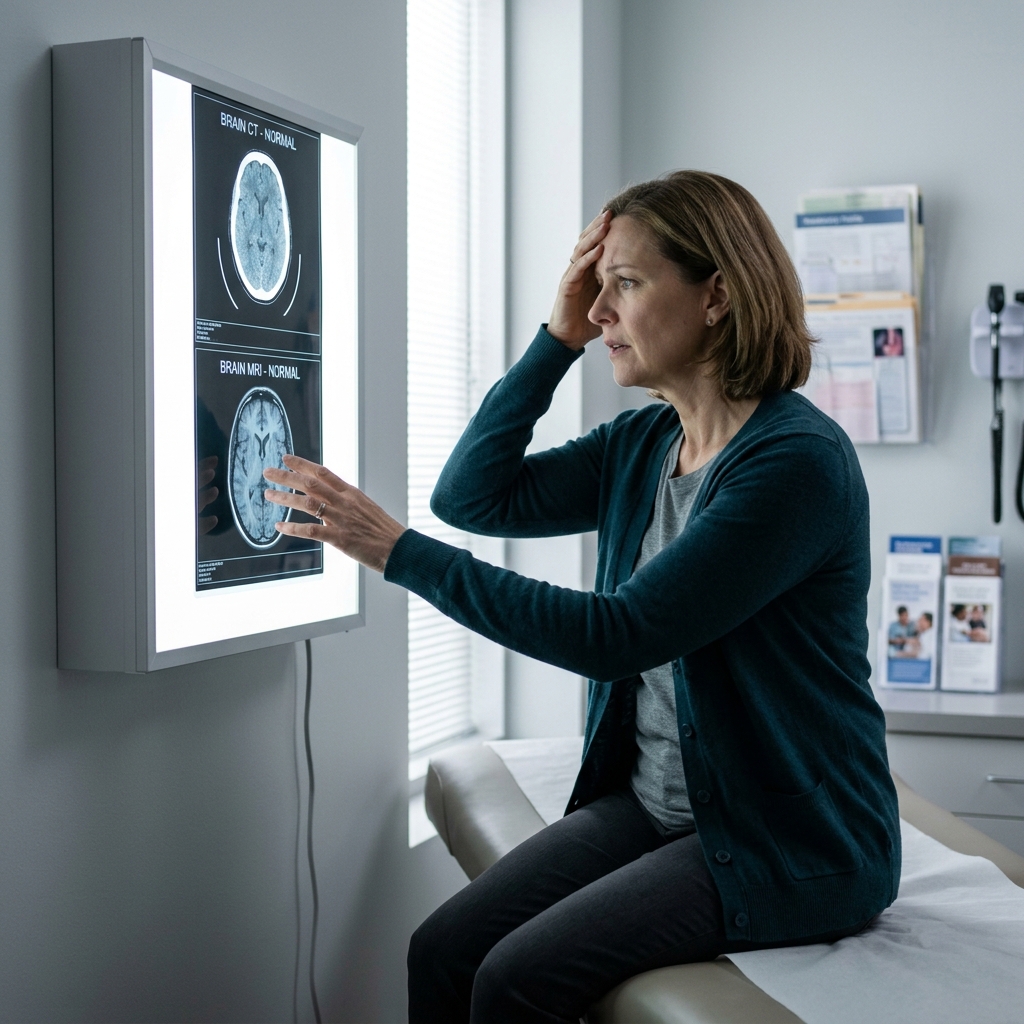
An ambulance transports you to the emergency department at Legacy Emanuel Medical Center or OHSU Hospital. Doctors quickly order a Computed Tomography (CT) scan and a Magnetic Resonance Imaging (MRI) scan to check for life-threatening emergencies. A few hours later, the physician delivers what sounds like great news: “Your scans are completely normal. You have a mild concussion, so just rest for a few days.”
Weeks pass, but you are not getting better. You are struggling with persistent headaches, memory lapses that make it hard to focus at your job in downtown Portland, and overwhelming fatigue. When you mention this to your insurance adjuster, they point to your clean hospital scans and claim you are exaggerating your symptoms.
This is the frustrating reality for thousands of people living with a Mild Traumatic Brain Injury (mTBI). If you find yourself in this situation, you are likely wondering: how do you prove an invisible injury when objective medical imaging says nothing is wrong?
Why Normal Scans Do Not Equal a Normal Brain
To understand why your scans are clear, it helps to understand what standard imaging actually looks for. Emergency room CT scans and standard structural MRIs are designed to detect macroscopic structural damage. They look for major physical injuries such as skull fractures, large brain bleeds, strokes, or tumors. They are lifesaving tools for acute trauma, but they have major limitations when it comes to concussions.
An mTBI does not usually cause gross structural damage. Instead, it causes microscopic injury at the cellular level. When your brain undergoes rapid acceleration or deceleration, the delicate nerve fibers (axons) stretch and tear. This is known as diffuse axonal injury. It disrupts the chemical and electrical signaling pathways of the brain without necessarily altering the physical structure that a standard MRI can capture. Your brain chemistry is altered, and its functional networks are impaired, but the tissue looks completely intact on a traditional scan.
Building the Invisible Evidence Chain
Because you cannot simply show a jury an X-ray of a broken bone, proving an mTBI requires assembling a comprehensive mosaic of circumstantial, clinical, and behavioral evidence. When our team builds a case for a client, we focus on several key pillars of proof.
1. Specialized Neurocognitive Testing
While an MRI looks at brain structure, a neuropsychological evaluation measures brain function. A licensed neuropsychologist can administer a battery of standardized tests that evaluate your memory, processing speed, executive functioning, and emotional regulation. By comparing your results against established baselines or demographic norms, these specialists can objectively demonstrate cognitive deficits that align perfectly with a traumatic brain injury.
2. Advanced Neuroimaging
Standard MRIs might miss an mTBI, but advanced imaging technologies can sometimes visualize the damage. Diffusion Tensor Imaging (DTI) is a specialized type of MRI that tracks the movement of water molecules along the brain’s white matter tracts, allowing doctors to detect microscopic axonal shearing. Functional MRIs (fMRI) and Susceptibility-Weighted Imaging (SWI) can also reveal alterations in blood flow and micro-bleeds that standard scans overlook.
3. Consistency in Medical Treatment
Your post-accident medical timeline is critical. Seeking specialized care from local neurologists, speech therapists, or vestibular physical therapists demonstrates that your symptoms are genuine and ongoing. Consistently reporting specific issues like light sensitivity, dizziness, or word-finding difficulties establishes a clear, undeniable medical narrative that insurance companies cannot easily dismiss as a pre-existing condition.
4. “Before and After” Witness Testimony
Some of the most powerful evidence comes from the people who know you best. Statements from your spouse, your friends, or your coworkers at a local Portland business can paint a vivid picture of how the injury has altered your daily life. If a supervisor testifies that you were an organized, high-performing employee before the crash on the Banfield Expressway but now struggle with basic daily checklists, that testimony provides compelling proof of your cognitive functional decline.
How a Portland Personal Injury Attorney Protects Your Future
Insurance companies routinely exploit normal diagnostic scans to deny valid claims. They rely on the misconception that a normal scan means a healthy brain. Defeating these tactics requires deep legal knowledge, access to top-tier medical experts, and an aggressive strategic approach to litigation.
If you or a loved one is struggling with the aftermath of a collision, working with an experienced Portland personal injury attorney is essential to leveling the playing field. At Dawson Law Group, we understand the complex science behind microscopic brain trauma. We know how to counter insurance defense strategies and present a compelling, evidence-based case to a jury at the Multnomah County Courthouse or the Mark O. Hatfield United States Courthouse.
Our firm handles the heavy legal lifting so you can focus entirely on your rehabilitation. We work closely with leading Pacific Northwest medical specialists to ensure your condition is thoroughly evaluated, properly diagnosed, and accurately valued. We calculate not just your current medical expenses, but also your long-term needs, including potential lost earning capacity if your cognitive struggles impact your career trajectory.
Speak with Dawson Law Group Today
A mild traumatic brain injury can disrupt your life, your livelihood, and your relationships. Do not let an insurance adjuster convince you that your pain isn’t real just because it doesn’t show up on a standard hospital scan.
Contact Dawson Law Group today to schedule a free, confidential consultation. Let our dedicated team help you secure the medical care, support, and financial compensation you deserve.
Disclaimer: The information provided in this blog post is for informational and educational purposes only and does not constitute formal legal advice. Reading this content does not establish an attorney-client relationship with Dawson Law Group. If you need legal advice regarding a specific personal injury matter, please consult directly with a qualified attorney licensed in your jurisdiction.