

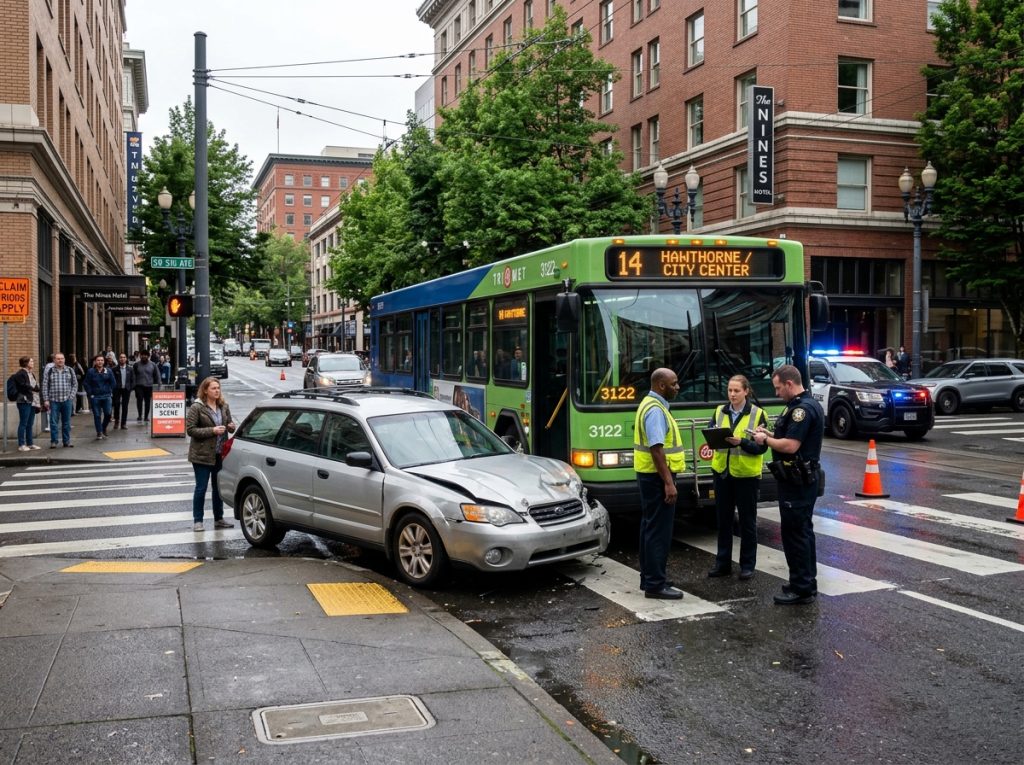
 Every single day, thousands of Portland residents rely on public infrastructure to get around. You might be commuting down Interstate 84, walking near the Moda Center, or riding your bike through the Pearl District. While we expect the drivers of public transit and municipal vehicles to exercise the highest level of care, accidents still happen.
If you have been involved in an accident with a TriMet bus, a Portland Bureau of Transportation (PBOT) maintenance truck, or any other city-owned vehicle, your life can be turned upside down in an instant. Medical bills pile up from providers like OHSU Hospital or Legacy Emanuel Medical Center, and you may be missing time from work.
When a private citizen hits your car on Southeast Powell Boulevard, the process for seeking compensation is relatively straightforward. But when the negligent driver is operating a government vehicle, the rules change completely. The most critical difference is the timeline. If you do not act quickly, you could lose your right to recover compensation forever.
The Standard Timeline vs. Government Claims: The Oregon Tort Claims Act
In a standard car accident case in Oregon, the statute of limitations gives you two years from the date of the crash to file a lawsuit against the at-fault driver. However, when a government entity is involved, a completely different set of rules applies under the Oregon Tort Claims Act (OTCA).
Under the OTCA, you cannot simply file a lawsuit against the City of Portland or TriMet. First, you must give the government formal notice that you intend to hold them liable for your injuries. This is known as a Tort Claim Notice.
For personal injury claims involving a government vehicle, you must present this formal written notice within 180 days of the date of the accident. If the unfortunate accident resulted in a wrongful death, the timeline is extended to one year, but for injuries, the 180-day mark is strict. 180 days is roughly six months. If you miss this deadline by even a single day, the court will likely dismiss your case, no matter how severe your injuries are or how clearly the government driver was at fault.
What Must Be Included in a Tort Claim Notice?
Simply calling TriMet customer service or emailing a city representative does not count as legal notice. The Tort Claim Notice must be a formal, written document sent to the correct government department or official. It generally needs to include:
- The name and address of the claimant (you) and your attorney.
- A clear statement of the time, place, and circumstances of the accident (such as a collision involving a TriMet bus near the Hollywood Theatre on Northeast Sandy Boulevard).
- A description of the injuries you sustained and the property damage caused.
- The name of the public body or the government employees involved, if known.
- A statement that you intend to claim damages and the estimated amount of those damages.
Drafting this notice requires precision. Any administrative errors can lead to the government rejecting your notice, putting your entire recovery at risk while the 180-day clock continues to tick.
Why Is the Timeline So Short for Public Transit and Municipal Accidents?
Government entities enjoy sovereign immunity, which historically protected them from being sued. The Oregon Tort Claims Act is a compromise; it waives that immunity to let citizens seek justice, but it imposes strict limits and short timelines to protect public funds and allow agencies to investigate accidents before evidence disappears.
Because city vehicles, public buses, and emergency vehicles are constantly on the move, video footage from bus cameras or nearby city traffic sensors can be overwritten quickly. Local businesses near the crash scene, whether it is a coffee shop in Northwest Portland or a grocery store in Northeast, might only keep their security footage for a few weeks. Acting within that 180-day window ensures that evidence can be legally preserved.
How a Portland Personal Injury Attorney Can Help You
Navigating a claim against TriMet or the City of Portland is incredibly complex. Government agencies have dedicated legal teams whose primary job is to minimize payouts and look for technicalities to dismiss your claim. You do not have to fight this battle alone.
An experienced attorney can take the burden off your shoulders by immediately launching an independent investigation. This includes securing dispatch logs, obtaining maintenance records for the vehicle, interviewing witnesses, and demanding the preservation of onboard camera footage from TriMet.
Furthermore, an attorney ensures that your Tort Claim Notice is drafted perfectly and filed with the correct administrative body before the 180-day deadline passes. If the government denies the claim or refuses to offer a fair settlement, your legal team will be prepared to file a formal lawsuit and represent your interests inside a courtroom, such as the Multnomah County Central Courthouse in downtown Portland.
Protect Your Rights: Contact Dawson Law Group Today
At Dawson Law Group, we understand the immense stress that follows an accident with a public vehicle. We know the local roads, the local courts, and the specific legal frameworks that govern municipal liability in Oregon. Our focus is on holding the responsible parties accountable while you focus on your physical recovery.
Because you only have 180 days to protect your right to compensation, time is of the essence. If you or a loved one has been injured by a city vehicle or a TriMet bus, do not wait for the deadline to approach. Contact Dawson Law Group today to schedule a free, confidential consultation. Let us handle the legal complexities while you focus on getting your life back on track.
Disclaimer: The information provided in this blog post is for general informational purposes only and does not constitute legal advice. Reading this information does not create an attorney-client relationship. Every legal case is unique, and laws or deadlines may apply differently depending on the specific facts of your situation. To obtain legal advice tailored to your case, please consult directly with a licensed attorney in your jurisdiction.